


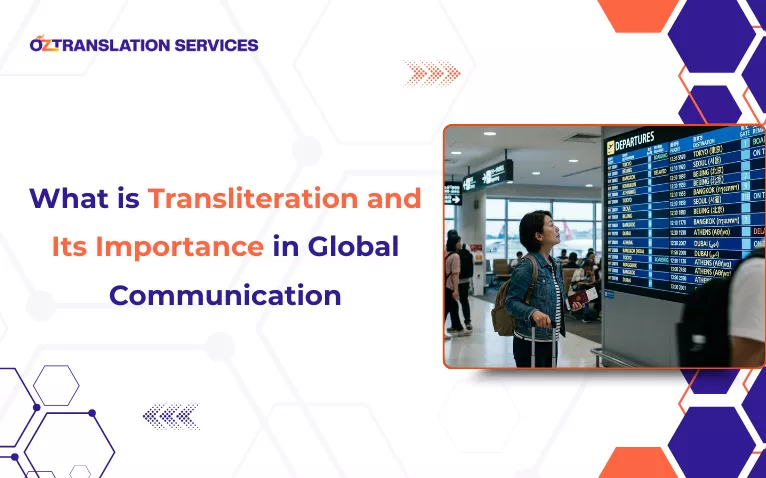
Pronouncing a Russian text ‘Привет’ will be impossible if you are not familiar with the Cyrillic script. But if you find it written in Latin letters ‘Privet’, you get an understanding of what it sounds like. This modification is known as transliteration.
It is an indispensable global communication tool and an instrument for business localization strategy.
This article will explain what is transliteration is and how it can be used to close the pronunciation gap for all learners. We shall look at how linguists transliterate different writing systems. We are also going to discuss standards, examples, and the transliterated meaning of popular terms.
Continue reading to learn why this process is important.
Table of Contents
ToggleKey Takeaways
- Transliteration swaps characters between scripts to preserve sound without changing a word’s actual meaning.
- It makes foreign street signs and passports readable for travellers and global businesses.
- ISO standards ensure character mapping remains consistent across international databases and legal documents.
- It helps learners and AI bridge the gap between unfamiliar writing systems.
- The process ensures brand names sound identical worldwide, regardless of the local alphabet.
What Is Transliteration?
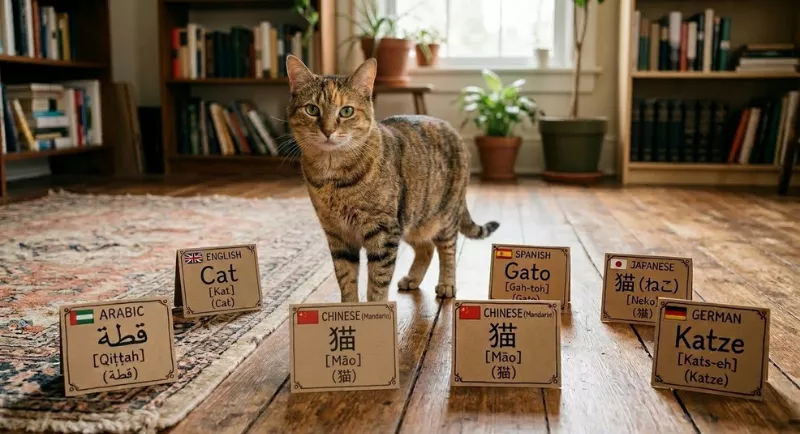
The meaning of transliteration is the process of converting text from one writing system to another. What a word means has nothing to do with it. Rather, it is concerned with the spelling and mapping of characters.
To define transliteration, consider it to be a letter-to-letter conversion. It is a technique that enables you to read text from one writing system using another.
The transliteration meaning involves changing characters but retaining the sound. It helps a multilingual audience to read foreign words.
High-level service providers like government bodies, global corporations, and legal firms need translitetation for daily operations. Professional translation service providers in Australia generally providers translitetation for commercial uses.
Examples of Transliterations
The practice of transliteration is seen in different language pairs. Here are some examples:
- Transliteration Arabic to English: “كتاب” becomes “Kitab”.
- Transliteration Greek to English: “λόγος” becomes “Logos”.
- Transliteration Ukrainian to English: “Київ” becomes “Kyiv”.
- Transliteration Japanese to English: “漢字” becomes “Kanji“.
- Transliteration Bengali to English: “বন্ধু” becomes “Bondhu”.
How Does Transliteration Work?

The transliteration process entails converting text from one alphabet to another. It is commonly referred to as romanisation when transferred to the Latin alphabet. Now, transliteration can be approached in two ways.
Phonetic Transcription
Phonetic Transcription is a technique that focuses on pronunciation. It sets out to imitate the sound of the original word. It employs letters or symbols that the reader is familiar with.
As an example, the Chinese phrase ‘你好’ (nǐ hǎo) will change to ‘ni hao’.
Someone unfamiliar with the Chinese script can now read this. They can also pronounce the word from another writing system with fair accuracy.
Orthographic Transliteration
Orthographic Transliteration system translates text in one scripting system to another, retaining the original spelling. It gives much importance to the structure and characters rather than the real pronunciation.
This method finds a direct correspondence between various writing systems. It makes sure that the visual form is the same as the original language. The sounds in the new language might be quite different.
Example: The Greek word “ευχαριστώ” (meaning ‘thank you’). This transliteration into English appears as ‘eucharistio’ instead of ‘e-f-kha-ree-STOH’. The spelling of the original Greek letters is preserved in this version. Nevertheless, the pronunciation does not coincide with English phonetics.
This technique is critical for proper conversion in scholarly texts.
Here’s a Quick Transliteration Guide (Arabic-Latin Edition)
| Arabic | Latin | Arabic | Latin | Arabic | Latin | Arabic | Latin |
| أ | a | ح | h | س | s | ق | q |
| ب | b | خ | kh | ش | sh | ك | k |
| ت | t | د | d | ص | s | ل | l |
| ث | th | ذ | dh | ض | d | م | m |
| ج | j | ر | r | ط | t | ن | n |
| ح | h | ز | z | ع | ‘ | ي | y |
Are There Any ISO Standards for Transliteration?
Yes! The International Organisation for Standardisation (ISO) has published standards for both human translation and transliteration. These standards ensure consistency when you transliterate names, titles, or terms from one writing system into the Latin alphabet. The following are important ISO Standards of transliterations:
| Standard | Language Pairs | Scope |
| ISO 9 | Cyrillic → Latin | Provides a one-to-one mapping of characters used for languages like Russian or Bulgarian. |
| ISO 233 | Arabic → Latin | Sets out how to convert characters so they can be processed in a database or cited globally. |
| ISO 259 | Hebrew → Latin | Handles how Hebrew characters are represented to allow for multilingual documentation. |
| ISO 843 | Greek → Latin | Covers character-to-character mapping and a phonetic variant for modern Greek. |
Why Is Transliteration Important and When Is It Used?

Transliteration assists in uttering the proper nouns, such as names and terms in a foreign linguistic system. Here are the top use cases:
Bridging the Pronunciation Gap for Global Readers
Transliteration helps those who can’t read the original script. It gives a straightforward direction on the way to pronounce a word. This is essential in the pronunciation of names or titles in a professional environment.
Processing Official Passports and Travel Identities
International travel documents and official IDs are transliterated. For example, during Passport translation, the transliterated holder’s name enables border agents of different countries to read the name. It also guarantees that names do not differ between written language systems.
Navigating Global Maps and Physical Signage
It enables individuals to read signs in another language. This is especially useful for travellers and tourists who need to navigate their way in foreign cities. It gives a means of reading the names of streets that had been inscribed in another writing system.
Entering Data into Multilingual Digital Systems
Transliteration allows digital systems to store and retrieve non-Latin text. Text from one source is easy to find by search engines. It is crucial to input foreign names in the systems that accept only Latin.
Adapting Global Brands and Media Labels
International companies use it for technical terms, product labels, and marketing. This keeps the brand sounding the same even in a new language. It helps readers say the brand name even if they cannot read the original script.
Facilitating Language Learning for New Students
It is a difficult task to learn a new language using a different writing system. It is easier to take the first steps when one can see the words written in Latin characters. It helps the learner to have confidence to talk before he/she masters the new alphabet.
Ensuring Accuracy in AI-Powered Translation Tools
AI-based tools require regular guidelines to transform data among scripts. This preserves the language integrity of the original language in the process. It facilitates high accuracy of transcription in automated systems.
Providing Accessibility through Visual Sign Systems
Modern visual communication cannot be complete without sign language translation. It helps in mutual understanding on diverse platforms. This offers an avenue through which all people can access information across languages.
Transliteration vs Translation: What’s the Difference?
Translation conveys meaning from one language to another. On the other hand, Transliteration doesn’t interpret the meaning of words into the target language. It only preserves sound and structure.
For example, the English translation of the Russian word “спутник” is “satellite.” But it’s transliteated word is “sputnik”. Here, the meaning is not conveyed; only the alphabet changes to represent its sound and pronunciation.
So, consider translation is the spirit of a word, while transliteration is the body. Transliteration focuses entirely on letter mapping, not the linguistic nuance. While word-for-word translation often advances to transcreation to handle the contextual and cultural nuance for descriptive texts. (Learn more about translation vs transcreation).
This table will help you understand the difference between Transliteration and translation.
| Original Script | Language | Transliterated English | Translate (Meaning) |
| مدرسة | Arabic | Madrash | School |
| βιβλίο | Greek | Vivlio | Book |
| नमस्ते | Hindi | Namaste | Hello |
| Спасибо | Russian | Spasibo | Thank you |
| 水 | Japanese | Mizu | Water |
Are Egyptian Hieroglyphics Translated or Transliterated?
Egyptian Hieroglyphics can be both translated and transliterated. Hieroglyphic transliteration uses specific symbols to show characters.
On the other hand, a translator requires an understanding of the ancient context of the hieroglyphics to convey meaning.
Here’s an example table showing how to transliterate and translate in hieroglyphics:
| Hieroglyph | Transliteration | Translation |
| 𓂋𓂝 | rꜥ | Sun |
| 𓈖𓏏𓂋 | nṯr | God |
| 𓉐𓂋 | pr | House |
| 𓂋𓈖 | rn | Name |
| 𓋹 | ꜥnḫ | Life |
Transliteration vs Transcription: The Key Difference
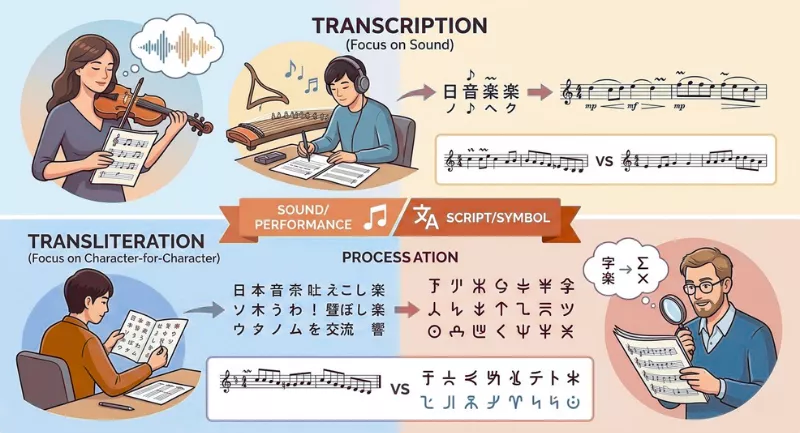
Indeed, phonetic transcription is a method used in transliteration. However, there’s one linguistic nuance where transliteration differs from transcription.
- Transcription is about the ear. Transliteration is about the eye.
- Transliteration converts text character-by-character from one script to another (e.g, Russian to Latin). It only focuses on spelling.
- On the other hand, transcription records the sounds of spoken language into written text (e.g., audio or video to script, often known as Audiovisual Translation). Transcribing focuses on the phonetics.
- Transliteration preserves letters; transcription captures pronunciation and spoken words.
What Are the Problems with Transliteration?
The transliteration process has limitations. The link between written and spoken words is often messy. The limitations include:
- No One-to-One Match: The Latin alphabet has only 26 letters, while others have many more.
- Differing Standards: Various style guides suggest different spelling choices in.
- Unique Sounds: Some sounds across languages do not exist in English language conventions.
- Imperfect Mirrors: Punctuation and tones are hard to preserve. Transliterated text can sometimes lose these small details.
Conclusion
Transliteration is a vital bridge for global communication. It helps us read and say words from many scripts. By focusing on letters instead of meaning, we keep the original sound. This process is key for travel, digital data, and brands. Accurate conversion connects our diverse world. It turns complex writing into simple text for everyone. Master these tools to improve your own localisation strategy today.
Frequently Asked Questions
What is the difference between pronunciation and transliteration?
How can I transliterate?
Is Jesus a translation and transliteration?
Was the Bible translated and transliterated?

- What Is Transliteration and Its Importance in Global Communication - March 17, 2026
- Types of Australian Work Visa and How to Get Them in 2026 - February 18, 2026
- Notarized Translation Guide: Certified Vs Notarized Explained - December 12, 2025