


In 2025, Australia’s GDP reached $1.8 trillion, with the service sector contributing over 60% and mining exports generating $455 billion, highlighting a balanced, resilient economy. This blog will explore immigration, economic diversity in Australia, and the economic impact of that diversity. We‘ll also be driving innovation, resilience, and prosperity.
Table of Contents
ToggleHow Does Immigration Contribute to Economic Diversity in Australia?
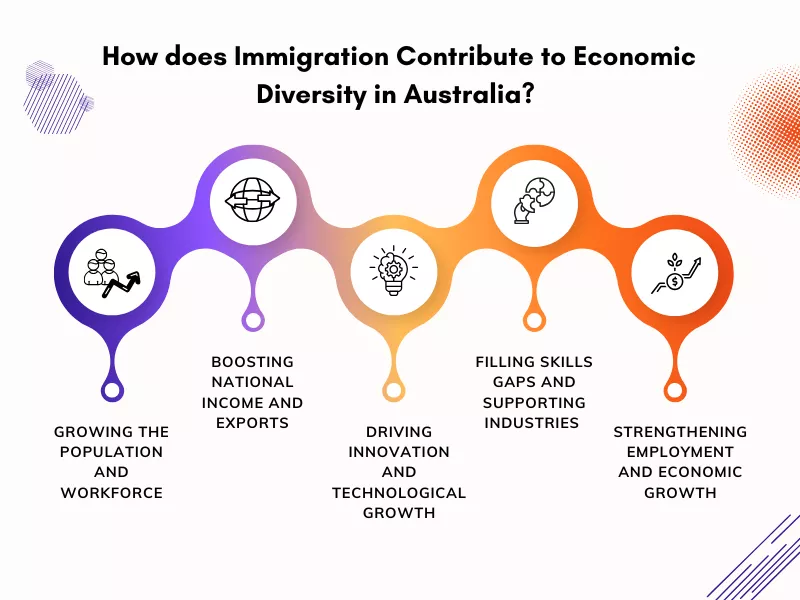
Immigration has always been a big part of Australia’s story, shaping its economy, culture, and communities. When people from around the world come to live and work here, they bring fresh ideas, new skills, and a wider range of experiences. This mix helps create economic diversity and keeps the Australian economy strong, flexible, and ready for change.
Of course, moving to a new country can be tough, especially if there’s a language barrier. That’s why NAATI-accredited translators play such an important role. Australian Translation Services helps migrants by translating official documents, study materials, and workplace requirements by NAATI certified translators, so they can settle in quickly and start contributing to the workforce right away.
Let’s look at how migration helps make Australia’s economy more diverse and resilient.
Growing the Population and Workforce
Economic immigration has helped Australia grow its population and fill skilled jobs. The government often encourages migrants to move to regional or rural areas to prevent a decline in skilled workers and to help fill gaps in the farming, construction, and mining sectors.
By boosting the number of skilled workers in the labour market, migration helps both big cities and smaller towns continue to grow. More people working means higher productivity, stronger communities, and good economic conditions.
Boosting National Income and Exports

Migrants don’t just work; they also pay taxes, spend money, and start businesses, which adds to Australia’s national income. Surprisingly, migrants pay more taxes than locals; therefore, bringing economic benefits. The education and export sectors also benefit from international students, as they have added a value of over $29 billion in 2022. This makes the education sector thrive in the country.
Driving Innovation and Technological Growth
Migrants often bring new creativity; their skills also add valuable knowledge to the economic diversity across Australian states and the work culture. This diversity in Australia helps companies become more creative and productive. In addition, it also supports entrepreneurs who want to start businesses and diversify Australia’s industries. Thus, making the country less dependent on any single sector.
Filling Skills Gaps and Supporting Industries
Migrants are filling skills gaps and supporting industries in Australia by bringing new ideas, technological innovation, and different perspectives that boost economic resilience and diversification.
In 2025, updated visa programs target healthcare, engineering, and ICT sectors, where local supply is low. This helps balance population growth and supports regional and rural areas, such as South Australia.
Skilled migrants strengthen Australia’s GDP, drive R&D, and reduce reliance on sectors like coal and gas, helping build a more multicultural, innovative, and competitive country’s economy. You can learn about a few interesting facts about Australia to know more about the country.
Strengthening Employment and Economic Growth
Migrants generally have high employment rates and play a key part in economic growth. They help businesses expand, fill labour shortages, and create new opportunities for others. Without immigration, there may be economic complexity in the country. Instead, migration keeps Australia dynamic, competitive, and ready for the future.
Role of Cultural Diversity in Migration
Cultural Diversity in Australia plays a vital role in influencing people’s decision to leave their home country. The migrants can make Australian societies more creative and lively, but it can also be hard for migrants to adjust, especially when language or social customs are very different.
More than 250 First Nations languages and 800 non-English dialects were spoken throughout the continent. And more than five Australians speak a language other than English at home. Hence, professional translations are needed to bridge the communication gaps in the business. Since we have seen that a diverse workforce comes up with creative solutions, it helps Australian businesses connect with global markets.
Last but not least, cultural differences result in misunderstanding or social exclusion, so professional translations are vital to open doors to new economic and social opportunities.
What Is Economic Diversity in Australia?
Economic Diversity in Australia is a mix of different industries that keep the country’s economy running. In Australia, these industries vary from place to place and each state has its own way of making money that affects the economy differently.
Mining is Big in WA and QLD
In Western Australia (WA) and Queensland (QLD), the economy depends heavily on mining and natural resources. These states generate significant export income, and about 12.9% of that income comes from the mining sector. Sounds good. But there’s a catch. Mineral prices can change quickly, and demand relies on other countries, especially China. So, if the global price drops, these states can get affected.
Services Drive NSW and VIC
In New South Wales and Victoria, the economy is more focused on services such as finance, education, and healthcare. Research shows that the service sector, which makes up approximately 75% of the NSW economy and over 90 % of jobs. These industries are more stable, so people usually have steady jobs.
Smaller Economies in SA and TAS
South Australia and Tasmania have smaller economies. These states focus on Agriculture, energy, and defense manufacturing. These sectors are important, but don’t make as much money as the bigger states.
Why Does This Matter?
Different states focusing on different industries are both a strength and a challenge. Overall, Australia is a wealthy country, but heavy reliance on mining in WA and QLD can make parts of the economy vulnerable. On the other hand, states that depend upon services show that diversification helps stabilize the economy.
What Type of Economy Is Australia?
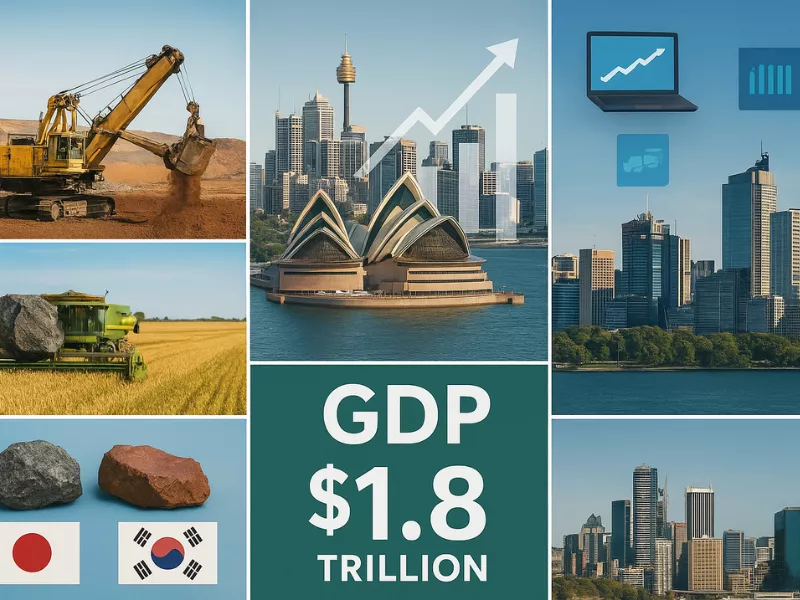
Australia has a highly developed mixed economy, blending free-market dynamism with government support. This Australian economic model promotes adaptability, social cohesion, and steady GDP growth. While private enterprise drives innovation and trade, public policy ensures fairness through investment in healthcare, infrastructure, and education and training.
Economic Structure and Key Sectors
Most industries in Australia, such as finance, agriculture, and mining, operate under market principles. The country is reliant on its abundant natural resources, including iron ore, coal, and gas, which remain its largest export products. At the same time, the country is increasingly driven by innovation and economic diversification, focusing on high-value services, international education, and technology.
GDP and Economic Indicators
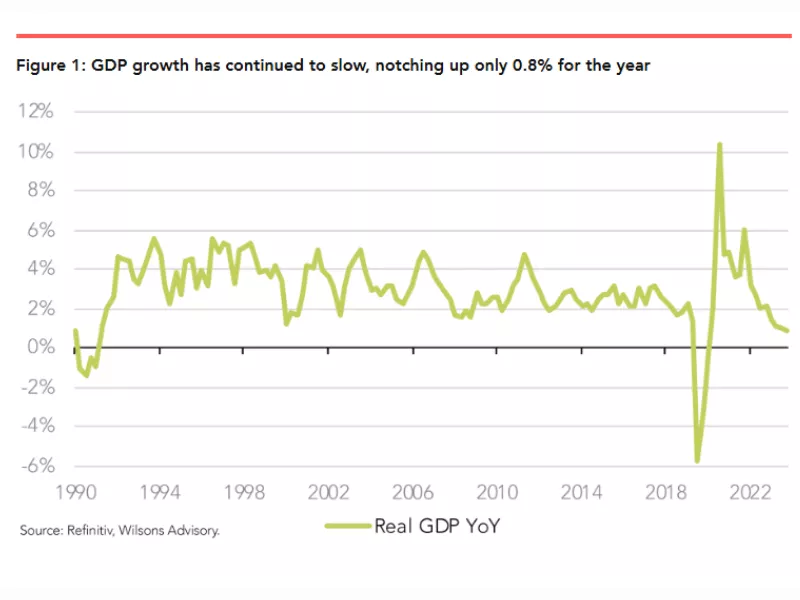
In 2025, Australia’s GDP is around $1.8 trillion (PPP), therefore ranking among the top economies worldwide. The service sector dominates, generating over 60% of total output and employment. Strong fiscal management, efficient taxation systems, and favorable economic conditions support the country’s long-term prosperity.
Trade, Exports, and Global Links
Australia’s geography gives it access to trade routes in the Asia-Pacific, strengthening ties with nations such as South Korea and Japan. The country exports minerals and energy and imports advanced technology and manufactured goods. Australia saw continuous growth opportunities in international education, which not only boosted exports but also deepened multiculturalism and social cohesion.
Regional and Global Importance
Cities like Sydney remain key financial and cultural hubs, therefore attracting millions of visitors and skilled Australians seeking mobility across industries. Australia’s stability and economic benefits make it a top destination for global investors. Despite Australia’s lack of economic dependence on any single industry, the government continues to encourage Research & Development to reduce over-reliance on resource exports.
Conclusion
In conclusion, we can see that the complexity in Australia is growing, but teh mix of multiculturalism, skilled migration, and strong governance supports a higher level of productivity and prosperity. The NAATI certified translators help migrants contribute to into the Australian economy. Overall, we can say that migrants play a vital role in boosting the economy of Australia.
Frequently Asked Questions
Is there economic inequality in Australia?
Yes, there is economic inequality in Australia, even though the country benefits from a diverse and robust economy. While many Australians experience disparities in income and wealth, this remains a concern across regions such as South Australia and Sydney.
What is Australia's economic diversity ranking?
In 2025, Australia ranked 105th out of 145 countries on the Harvard Economic Complexity Index (ECI), down from its previous ranking of 93rd-104th. This low ranking highlights limited economic diversity and heavy reliance on mining exports and raw materials.
What is the government’s immigration policy for addressing skills shortages in Australia?
The Australian Government has introduced the Skills in Demand visa (subclass 482) and has replaced the older Temporary Skill Shortage visa. The continent has planned to offer around 132,200 skilled visa places. It’s about 71% of the total migration program.
How does Australia support language and settlement services for migrants?
The continent supports migrants with a variety of languages and settlement services. The Australian Government funds programs like the Adult Migrant English Program (AMEP). The scheme offers up to 510 hours of free English language classes to eligible migrants and humanitarian entrants.
In addition, settlement services include casework, housing support, employment assistance, health referrals, and community integration help through organizations such as Migrant and Refugee Settlement Services and Multicultural Australia.

- How to Say Thank You in Thai: Polite and Useful Expressions - April 8, 2026
- Tagalog vs Filipino 2026: What’s the Difference? - January 14, 2026
- 8 Tips to Consider Before Hiring a Translation Agency [Best Translation Companies] - December 27, 2025