


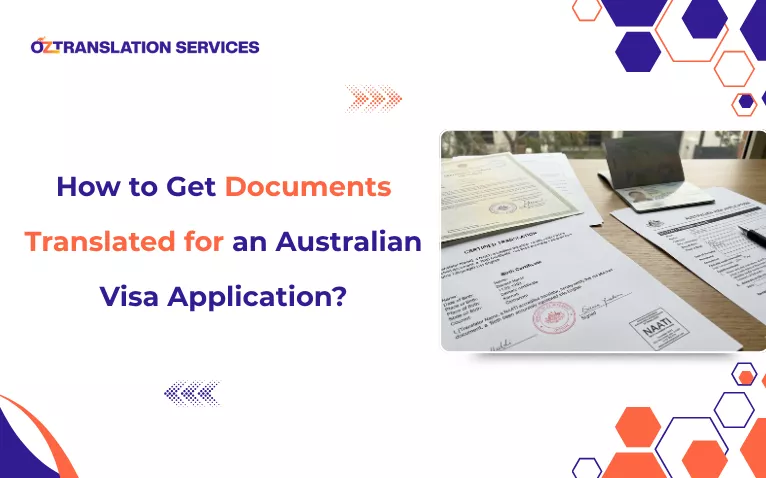
You have gathered your bank statements. Your academic transcripts are ready. You have filled out every form. Then you realise your birth certificate is not in English. Now what?
This is one of the most stressful surprises applicants face during the Australian visa process. Knowing how to get documents translated correctly can be the difference between a visa grant and a frustrating rejection. The Australian government is strict. They only process English-language documents. If your paperwork does not meet their translation standards, your application fails.
In this blog, we will talk about what you need to do to get your document translated in the right manner.
Table of Contents
ToggleKey Takeaways
- Australia requires certified translations, not just any English version of your documents.
- NAATI accreditation is mandatory for translations done inside Australia.
- You must submit both the original document and its English translation.
- Free services and AI tools are not accepted under any circumstances.
- Professional document translation typically starts from AUD 60 and takes 6 hours.
Why You Need an Official Translation for an Australian Visa?
The Australian government and the Department of Home Affairs operate entirely in the English language. If your documents are in another language, they simply cannot process them.
But it goes further than just translating the words. The translation must be certified. This means a qualified, accredited translator must confirm in writing that the translated document is a true and accurate reflection of the original. A translated document without this certification does not qualify for a visa application.
Don’t consider it a formality. It is a legal need for document translation for visa application in Australia. A right translation protects your application and makes sure the government can verify your identity.
To understand just how multilingual Australia really is, it helps to read up on some interesting facts about Australia and why language accuracy matters so much in official processes there.
NAATI Accreditation: The Standard You Need to Meet
When it comes to getting documents translated for an Australian visa, the name you will come across most is NAATI. It stands for the National Accreditation Authority for Translators and Interpreters and is the official authority for translators and interpreters recognised by the Australian government.
If you are applying from within Australia, you must use an accredited translator. Translations prepared by non-accredited individuals inside Australia will not qualify and will be rejected outright.
If you are applying from another country, then you don’t need a NAATI translator. But the translator you choose should give their full name along with a signed declaration of accuracy. Translation within Australia is held to a stricter standard than offshore applications, so always verify the accreditation status of whoever you engage.
Which Documents Needs Translation?

Not every document in your file will need translation. But many personal, academic, and financial records will. Here is what is commonly required when getting documents translated for immigration:
- Identity Documents: You need a birth certificate translation, a national ID card, passport pages in another language, marriage certificate
- Academic Records: University transcripts, mark sheets, diplomas, and school leaving certificates
- Financial Documents: Bank statement translation, property deeds, and tax records in a foreign language
- Character Documents: Police report translation is needed if issued by a non-English-speaking country
International applicants from education, business, and community backgrounds alike must ensure every non-English record is properly translated. This applies whether you are applying for a student visa, a skilled visa, or a family visa.
When getting a birth certificate translated for immigration, always work from the original document. If you do not have your original and need to obtain one first, here is a helpful guide on Australian birth certificate replacement that covers the process step by step. Translating a photocopy of a photocopy raises red flags with visa officers and can delay your application significantly.
How to Get Documents Translated: A Step-by-Step Process

Here are the steps to get documents translated for a visa application, laid out clearly:
Step 1: Gather Your Originals
Get a clean scan of the original documents that need translation or to convert your overseas driver’s licence to Australian licence. A blurry scan can cause a delay. Always start with the best quality copy of your original you can produce.
Step 2: Find a Qualified, Accredited Translator
Do not translate the family law documents on your own. Self-translation is a conflict of interest and is never accepted by the Australian government. It does not qualify under any circumstances.
Step 3: Review the Certified Translation Carefully
Once you receive your documents, check them properly. A valid certified translation of non-English documents for government applications and an Australian visa should include:
- The accredited translator’s full name and signature
- Contact information, including phone, email, and address
- Their professional credentials and qualifications
- A signed statement confirming the translation is a true and accurate reflection of the original
- The date the translation was completed
Step 4: Submit Both Versions Together
This is where many applicants make a critical mistake. When uploading to your ImmiAccount, you should attach the original document along with the English-translated document. Uploading only the English version is not sufficient. The government needs to see both to verify and certify the translated content against the original for an Australian work visa.
Common Mistakes to Avoid When Getting Official Translations
Understanding how to get an official translation of a document also means knowing what not to do. It is also important to go through the tips to hire a translation agency to avoid errors. These are the errors that cause the most problems:
- Using free services or AI tools: Hiring a freelance translator vs agency, you must understand that free services and automated tools carry no legal weight. They do not qualify under Australian government requirements, regardless of how accurate they seem.
- Missing certification details: A translated document without the accredited translator’s signature and declaration is just a draft. It will not be accepted.
- Name spelling inconsistencies: If your name appears differently across documents, ask the translator to include a note. Your name must match your passport exactly in every translated document you submit, including your divorce certificate translation.
- Ignoring stamps and seals: A professional translation has everything on the page. It has official stamps, seals, and letterheads. Leaving these out is a common and costly oversight.
- Confusing notarised and certified: A notarised translation is not the same as a certified translation for visa purposes. Australia requires certified translations from a qualified, accredited translator, not just a notary’s stamp.
- Submitting without the original: Always submit the original document alongside the translation. The government requires both to support and verify your application.
Timeline and Cost of Getting Documents Professionally Translated
Planning early saves a lot of time. Here is what to expect when you request professional translation services for your visa application:
- Turnaround time: The time required to get documents translated for visa purposes is usually 6 hours. Complex legal court translation or financial documents may take longer depending on the language pair and translator availability.
- Cost: The cost of getting documents professionally translated in Australia typically starts from AUD 60. Urgent requests may attract a higher fee.
These fees are a small price compared to the cost of a visa refusal and having to reapply.
Online vs In-Person Translation Services
There are many candidates who ask if they can get their documents translated online for an Australian visa application. The answer is yes, provided the translator is qualified and the translation is properly certified.
Only go for reputed services with certified migration translators. You send your scans, they translate and certify, and return the documents to you digitally or by post. This is a practical option for international applicants in the education, business, or community space who need support from outside Australia.
It is also worth knowing the difference between translation and transliteration before you place your request. Some names and proper nouns in your original documents are transliterated rather than translated, and understanding this distinction helps you catch errors before you submit.
What is not valid is using free translation platforms or AI-powered tools with no professional oversight. These do not qualify under Australian government requirements and will not be accepted.
Final Checklist Before You Submit
Before you upload your documents, run through this quick check or contact us:
- Both the original and the translated document are included
- The accredited translator’s name, signature, credentials, and contact information appear on every translated page
- Your name matches your passport exactly across all documents translated
- Stamps, seals, and letterheads from the original are reflected in the translation
- You have used an accredited translator or a qualified professional from a reputable translation service
- The translation includes a signed statement confirming it is a true and accurate reflection of the original
- Your request has been placed with enough time to avoid last-minute delays
Conclusion
Getting your documents translated for an Australian visa is not complicated, but it does require care and the right professional support. Use a qualified, accredited translator, follow the certification requirements set by the Australian government, and always submit both the original and the translated document together. Whether you are applying from within Australia or overseas, meeting these standards is non-negotiable. Do it right the first time, and you remove one of the most common reasons applications miss out on a visa grant.
Frequently Asked Questions
Do I need a certified translator to get my documents translated for an Australian visa?
How long does it take to get official documents translated?
How much does it cost to get documents translated for immigration purposes?
Can I get my documents translated online for an Australian visa application?
Is a notarised translation the same as a certified translation for visa purposes?
Does Australia accept translations from any certified translator, or does it require NAATI accreditation?
Which personal documents typically need translation for an Australian student visa?
